Chatbots to Autonomous Workflows and Harness Engineering: Claude Managed Agents vs. hosted LangChain Deep Agents vs. OpenAI's answer
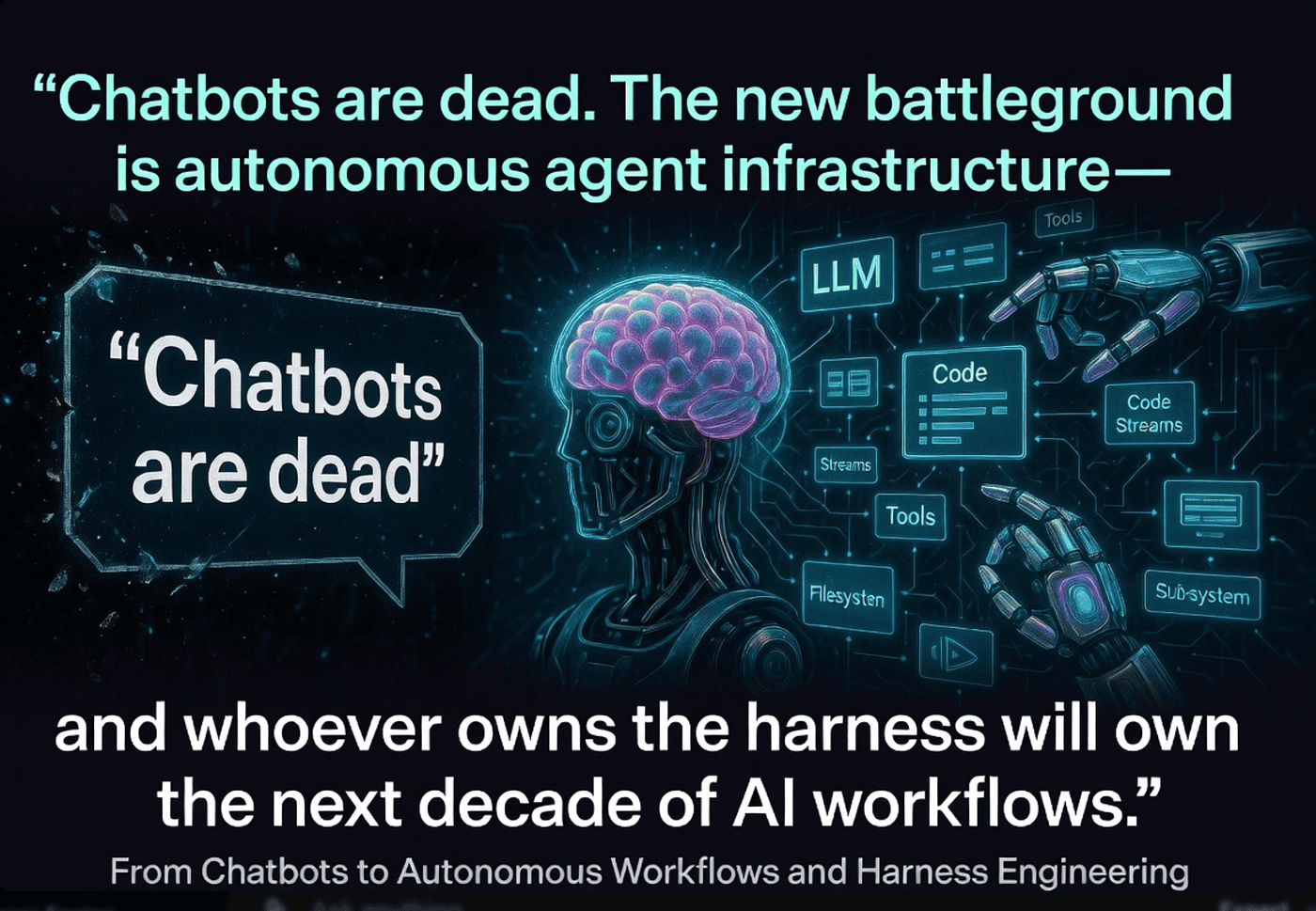
Navigating the New AI Agent Infrastructure: Chatbots are dead. The new battleground is autonomous agent infrastructure; and whoever owns the harness will own the next decade of AI workflows.
Originally published on Medium.
Navigating the New AI Agent Infrastructure: Chatbots are dead. The new battleground is autonomous agent infrastructure; and whoever owns the harness will own the next decade of AI workflows.
1. Introduction: The Shift to Autonomous Infrastructure
The artificial intelligence landscape is undergoing a fundamental structural transformation, pivoting from "model-centric" conversational cycles to "infrastructure-centric" autonomous agents. While the first wave of LLM implementation focused on simple request-response interactions, the current frontier demands long-horizon autonomy: the ability for models to operate within complex execution environments, manipulate filesystems, and coordinate specialized sub-agents.
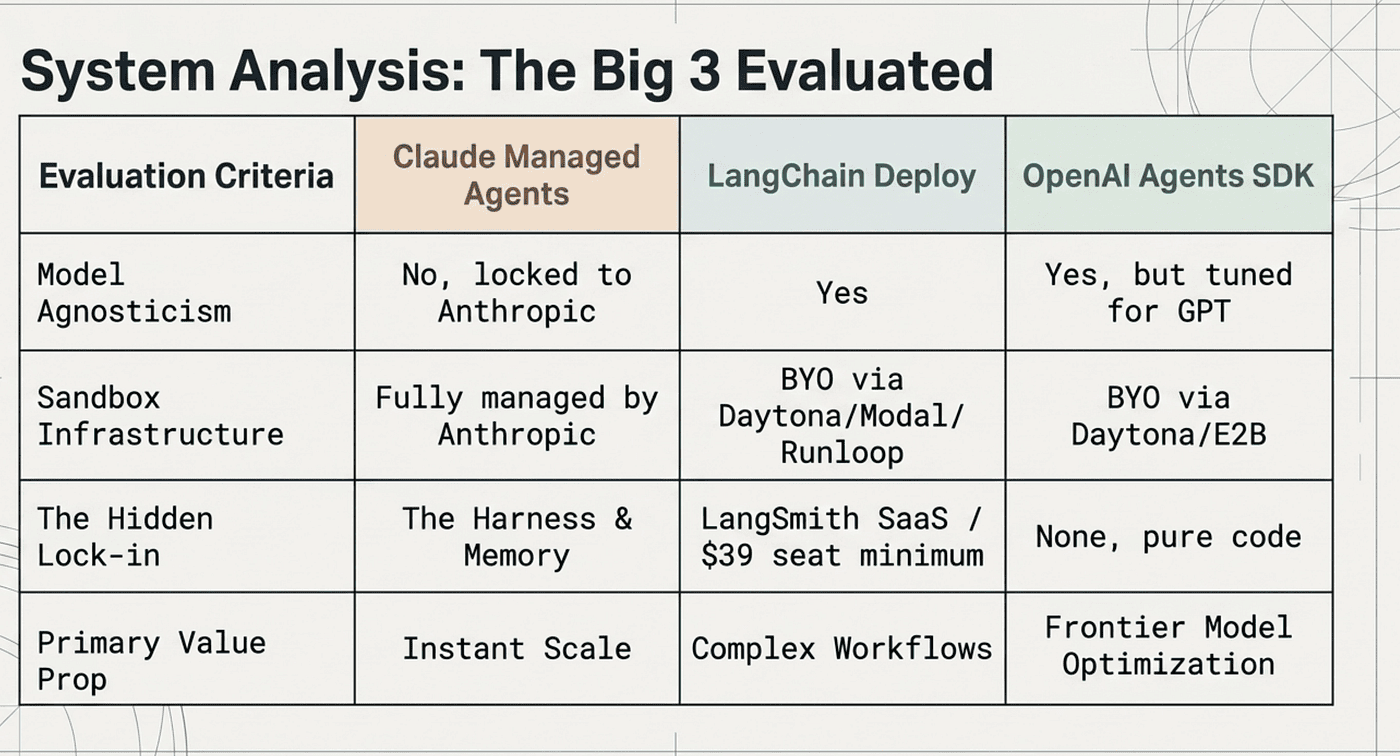
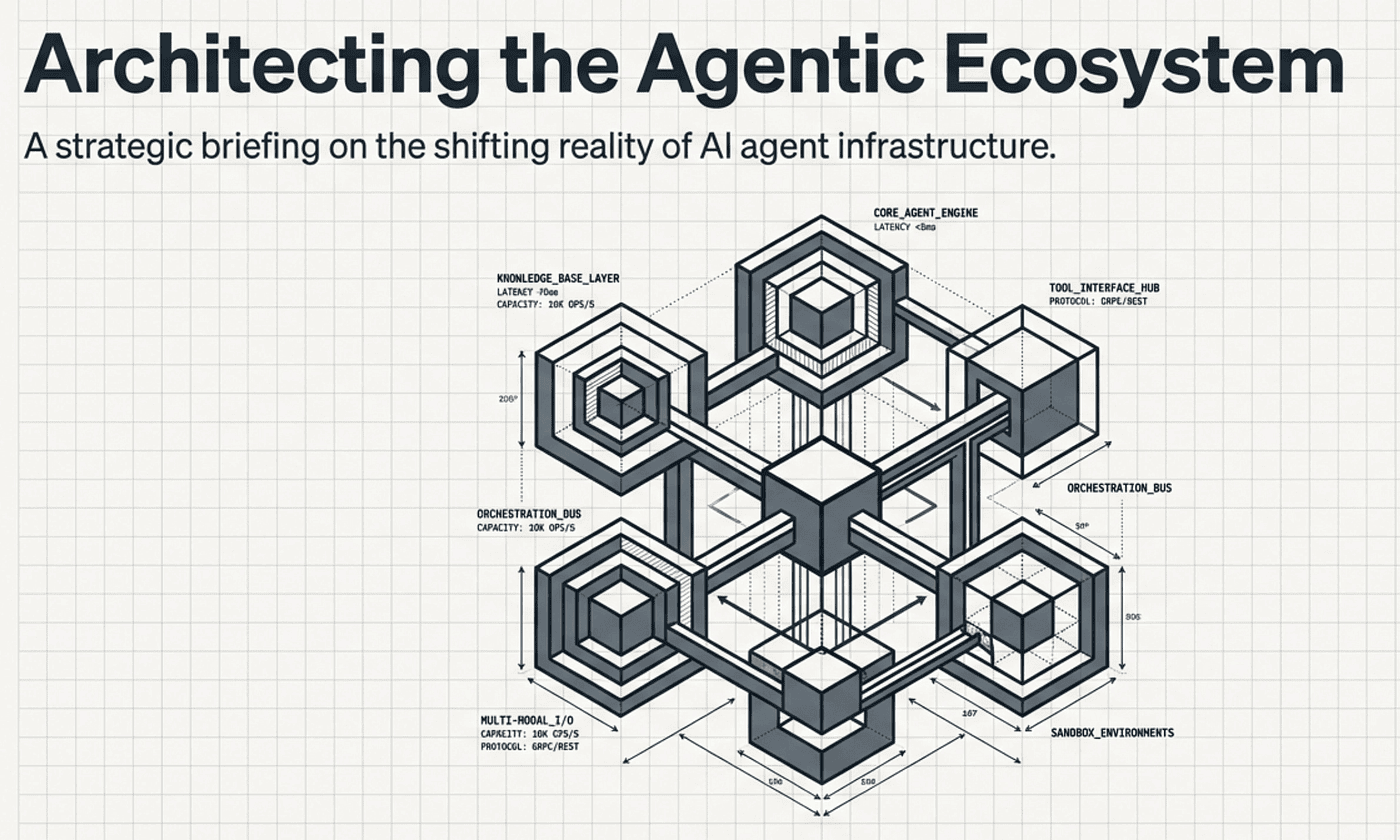
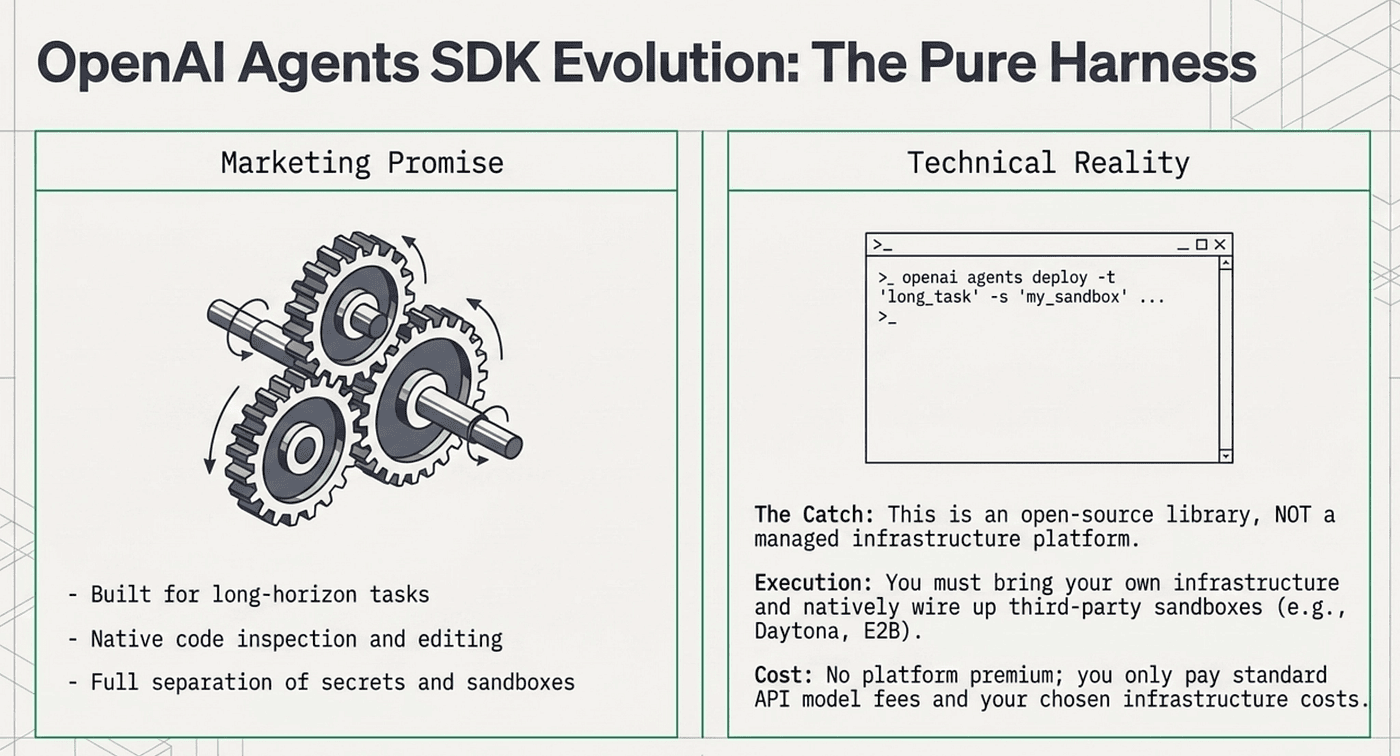
Central to this shift is the emergence of the "harness." In professional AI architecture, the harness is the critical orchestration layer that manages the loop between the model's reasoning "brain" and the "hands" of tool execution. As organizations transition from experimental prototypes to production-grade deployments, the choice of harness has become a high-stakes architectural decision. This has created a "build-to-buy" spectrum dominated by three distinct philosophies: the managed "sovereign" infrastructure of Anthropic, the flexible open-source frameworks of LangChain, and the developer-centric, model-native SDK approach of OpenAI.
2. Anthropic Claude Managed Agents: Sovereign Infrastructure
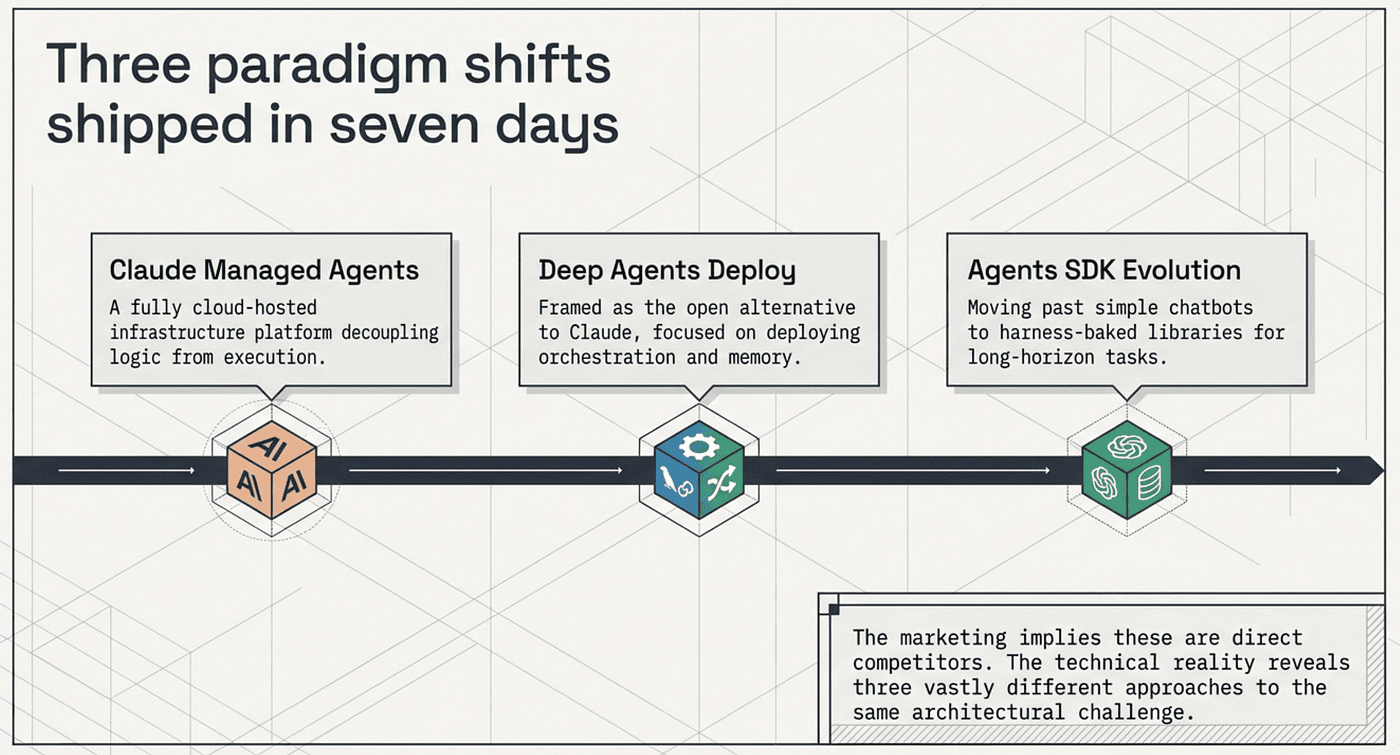
Anthropic's strategy with Claude Managed Agents is to collapse the external orchestration layer into a "one-stop shop." By providing a fully managed execution stack, Anthropic aims to solve the inherent brittleness of self-managed agent loops. This "sovereign infrastructure" approach ensures that while the reasoning models evolve, the underlying interfaces for tool interaction and session management remain stable.
The Architecture of Virtualization
The platform is built upon four specific technical primitives that define the virtualization of the agentic loop:
- Agent: The static definition of the model, system prompt, and tools; it defines "who" the agent is and its permission boundaries.
- Environment: A configured cloud container template with pre-installed packages, providing the "world" (OS and dependencies) the agent inhabits.
- Session: A running instance of an agent within an environment, representing the "living" task and persisting the event log and filesystem state.
- Event: A message unit (user turn, tool result, or status update) exchanged via Server-Sent Events (SSE), serving as the protocol for application-agent communication.
The Security Isolation Layer
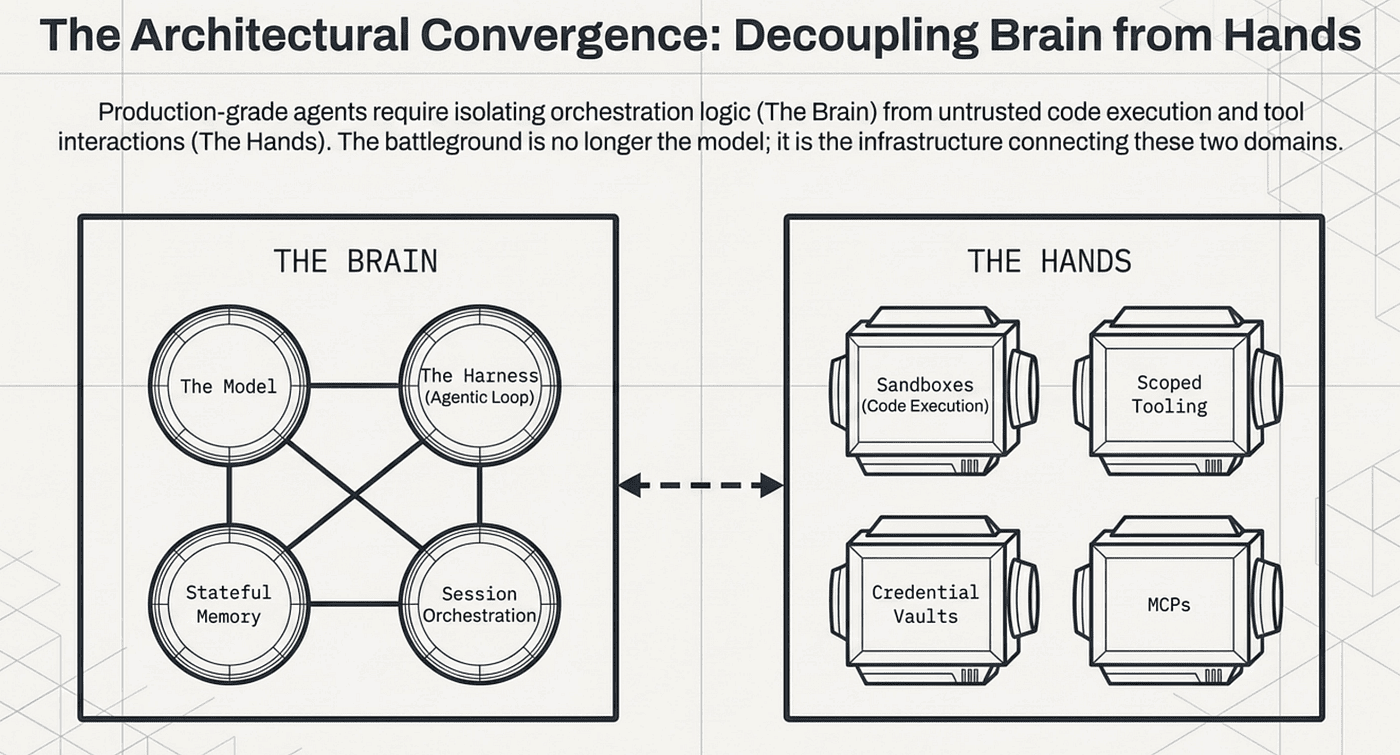
A critical structural fix in Anthropic's design is the "Secret Vault" pattern. In traditional, unmanaged setups, API credentials often reside in the same environment where a model executes code, creating a massive vulnerability for prompt injection. Anthropic decouples these by storing sensitive tokens in a secure vault unreachable from the sandbox. When Claude requires a tool, a dedicated proxy fetches the credentials and executes the call, isolating the "thinking" process from the "execution" process and preventing attackers from exfiltrating API keys.
Economics and Strategic Limitations
- The "11% Rule": Anthropic introduces a $0.08 hourly runtime fee, metered to the millisecond. While this is a novel cost, synthesis of usage data reveals that for a typical coding session, runtime fees account for only ~11% of total costs, with tokens accounting for the remaining 89%.
- Research Preview Gap: Strategic planners must note that multi-agent capabilities are currently limited to a "flat" graph (only one level of delegation).
- Memory Constraints: Persistent memory is currently capped at 100KB per unit, a design choice intended to maximize prompt cache hit rates but one that requires developers to manage high-granularity data themselves.
3. LangChain Deep Agents: Open-Source Flexibility vs. Commercial Reality
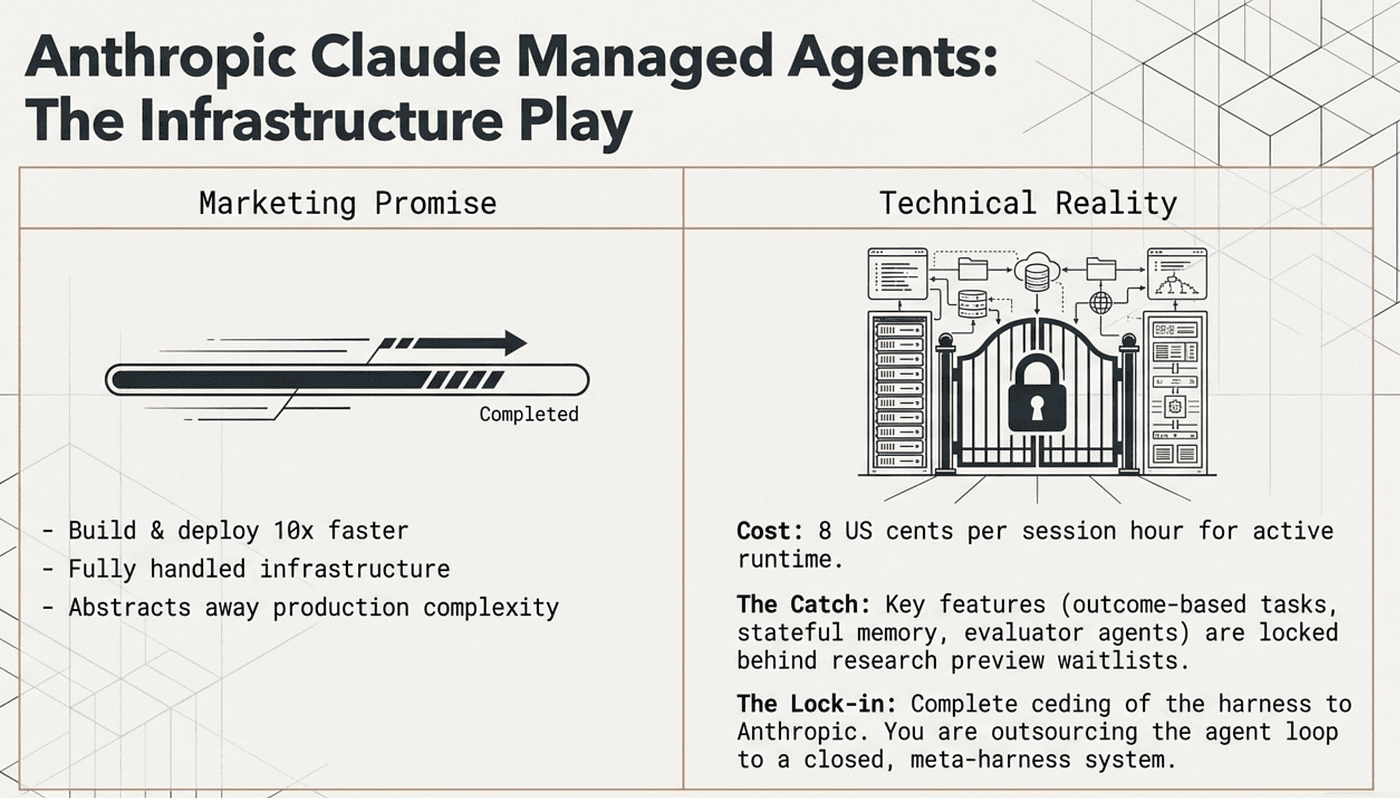
LangChain's "Deep Agents" are designed for "deep" work — long-horizon objectives that require reactive planning rather than simple tool-calling. This framework provides the highest level of model-agnostic control, allowing developers to swap between Claude, GPT-5.4, and open-source models without rebuilding the core orchestration logic.
The Planning and Execution Core
The architecture rests on four pillars: the write_todos planning tool for goal decomposition, sub-agents for context isolation, a shared filesystem workspace, and automatic context management via summarization. A major strategic advantage here is the integration of "Self-Healing" deployment pipelines through "Open SWE." This allows autonomous coding agents to triage their own production regressions — for example, by detecting Docker build failures and opening Pull Requests with the necessary fixes.
Cost and Tier Analysis
While the core library is MIT-licensed, moving to production typically requires the proprietary LangSmith platform.
Developer tier
- Monthly seat cost: $0
- Key feature: MIT-licensed library
- Production status: Local prototyping only
Plus tier
- Monthly seat cost: $39 / user
- Key feature: Managed Cloud Deploy
- Production status: Moderate production scaling
Enterprise tier
- Monthly seat cost: Custom
- Key feature: Hybrid / Self-hosted VPC
- Production status: Required for BYOC/Data Sovereignty
Note: All production deployments incur an additional $0.001 fee per node (agent action).
Advanced Memory and Durable Execution
LangChain utilizes a sophisticated multi-tenant memory system:
- StateBackend: Handles ephemeral, intermediate data ("scratchpad").
- StoreBackend: Manages long-term, persistent data across sessions.
- CompositeBackend: The production standard, allowing for "Durable Execution."
This architecture enables agents to "Time Travel" — checkpointing state at every step so they can resume from a network failure or human-in-the-loop pause without losing progress. However, for mid-sized firms, the fact that "Bring Your Own Cloud" (BYOC) is gated behind the Enterprise tier represents a significant data sovereignty risk.
4. OpenAI Agents SDK: The Developer-Centric Middle Ground
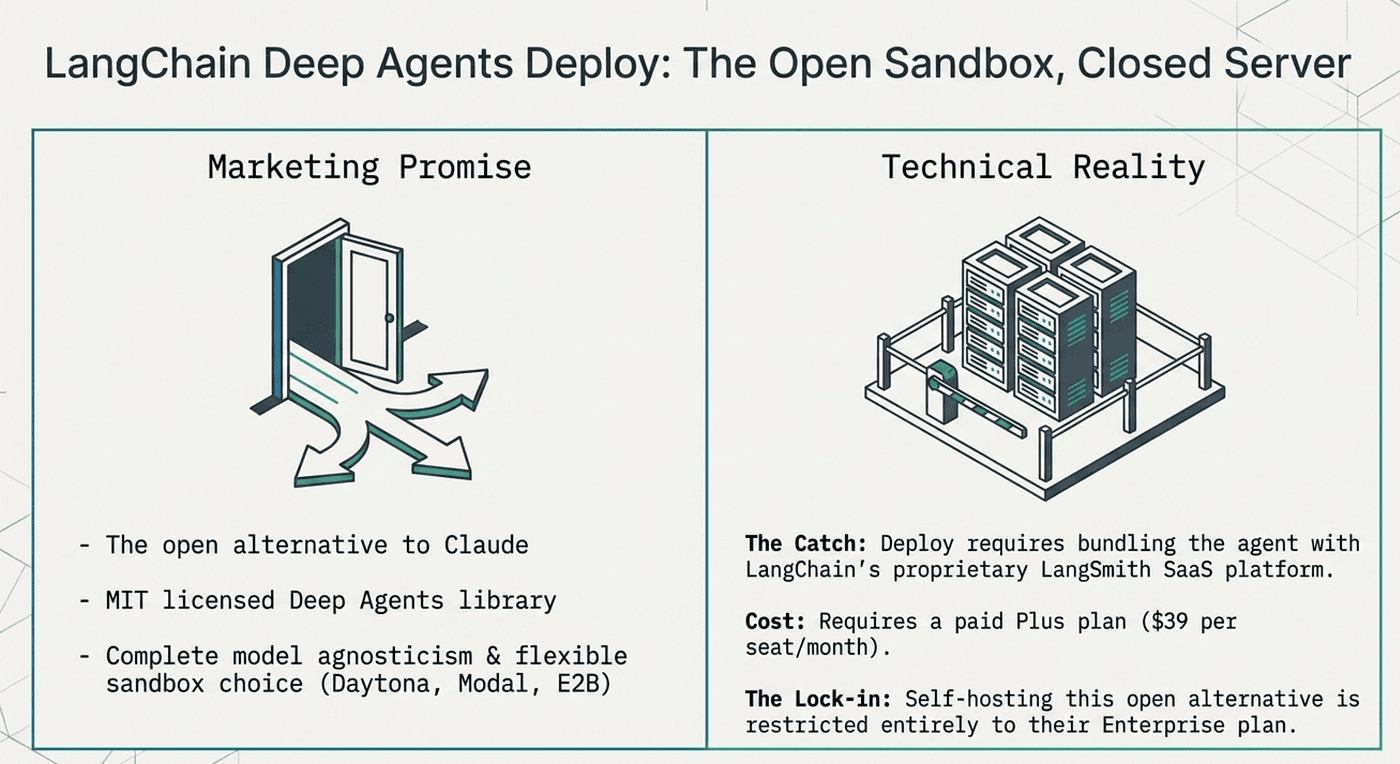
The OpenAI Agents SDK is a model-native harness designed to support complex, branching "handoffs" between specialists. It positions itself as a "highly capable middle ground" that avoids the platform taxes of Anthropic or LangChain by adopting a "bring your own compute" philosophy.
Architecture of Specialist Collaboration
The SDK utilizes the Runner (managing the execution loop) and the SandboxAgent (defining persona and requirements). It excels in "specialist collaboration," allowing a "Manager" agent to delegate to "Specialists" with far greater nesting depth than current managed offerings.
Infrastructure Ownership and Portability
The SDK introduces the Manifest abstraction — a portable blueprint that describes the starting layout of a fresh sandbox workspace, including file mounts, packages, and directory structures. This ensures that an agent developed locally in Docker remains consistent when moved to a cloud sandbox provider like E2B, Modal, or Daytona.
Security through Separation of Planes
The SDK maintains a strict separation between the Control Plane (the trusted harness) and the Execution Plane (untrusted compute). Like Anthropic, it uses a secret vault pattern — often utilizing Cloudflare Durable Objects as the trusted vault. Secrets are injected into the ephemeral environment only when needed, ensuring the model never "sees" the credentials, thereby reducing the blast radius of a potential sandbox compromise.
5. Strategic Synthesis: Aligning Philosophy with Need
Enterprise architects must view this market as a three-tiered spectrum: Tier 1 (Direct API/Build), Tier 2 (Framework-led/OpenAI SDK), and Tier 3 (Managed Infrastructure/Anthropic & LangSmith).
Comparative Strategic Driver Analysis
Anthropic Managed Agents
- Speed to Market: Highest (Zero infra code)
- Model Flexibility: None (Claude only)
- Data Sovereignty: Low (Vendor-managed)
- Scaling Costs: High ($0.08/hr adds up)
- Best for: Rapid internal tools & prototypes
LangChain Deep Agents
- Speed to Market: High (Managed cloud)
- Model Flexibility: Highest (Model-agnostic)
- Data Sovereignty: Medium (BYOC Enterprise-only)
- Scaling Costs: Variable ($0.001/node fee)
- Best for: Consultancies & multi-LLM clients
OpenAI Agents SDK
- Speed to Market: Medium (Code-first)
- Model Flexibility: High (OpenAI optimized)
- Data Sovereignty: Highest (Developer-managed)
- Scaling Costs: Predictable (Compute only)
- Best for: Mature engineering teams wanting control
Tailored Recommendations
- Anthropic: Best for rapid prototyping of high-value internal tools where the convenience of a "one-stop shop" outweighs vendor lock-in.
- LangChain: Best for consultancies needing to remain model-agnostic to serve diverse client requirements across various LLMs.
- OpenAI: Best for enterprise engineering teams with mature cloud infrastructure who want to maintain strategic control and avoid SaaS platform taxes.
6. Conclusion: The Hybrid Future
The agentic AI field is maturing rapidly, moving away from experimental loops toward professional software engineering practices. The emergence of the Model Context Protocol (MCP) and standards like AGENTS.md signals a stabilization of the industry.
The ultimate winner in the "build-to-buy" spectrum will be the framework that successfully balances automated "magic" with "boring," secure, and auditable infrastructure. We are entering a hybrid future where managed execution environments pair with developer-owned, code-first harnesses. Maintaining strategic control over this harness is the only way for organizations to ensure long-term sovereignty as AI enters the era of truly autonomous workflows.
Tiny fact-check (public info)
- Anthropic's runtime fee is ~$0.08/hr (metered) and multi-agent remains in research preview / limited capability.
- LangChain Deep Agents + LangSmith tiering and the production upsell dynamics broadly align with how teams actually ship.
- OpenAI Agents SDK's "bring your own compute" posture and handoff / specialist model framing is accurate.
Which harness philosophy are you betting on for your team — and why?