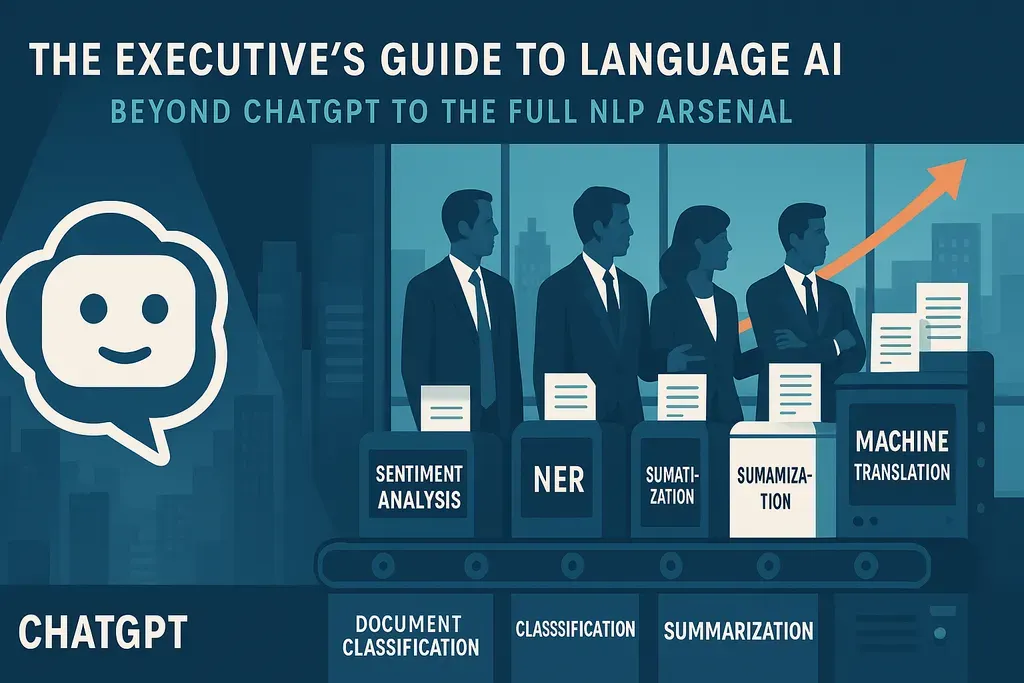
The Executive's Guide to Language AI: Beyond ChatGPT to the Full NLP Arsenal
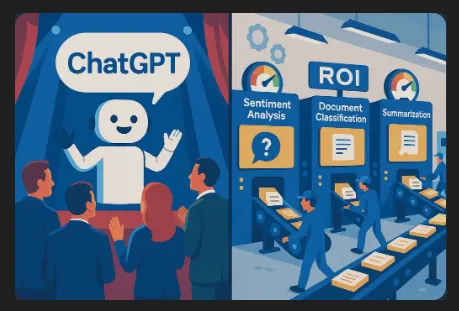
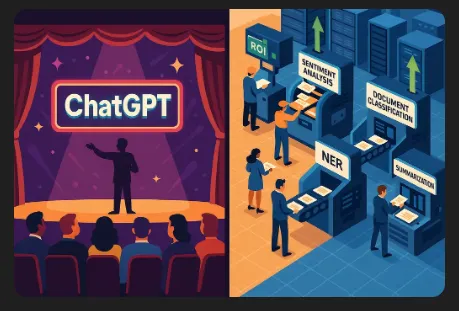
Your competitors are not just using ChatGPT. They are implementing advanced sentiment analysis, document classification, and custo
Originally published on Medium.
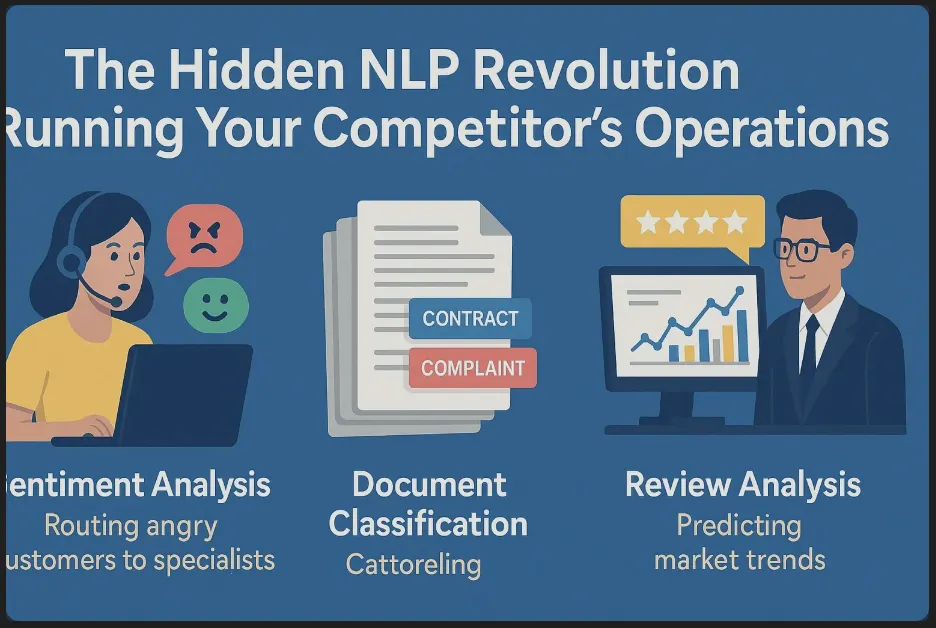
Your competitors are not just using ChatGPT. They are implementing advanced sentiment analysis, document classification, and custo
- Mathematical calculations requiring precision
- Staying current (without RAG integration)
- Distinguishing correlation from causation
- Handling scenarios far outside their training data
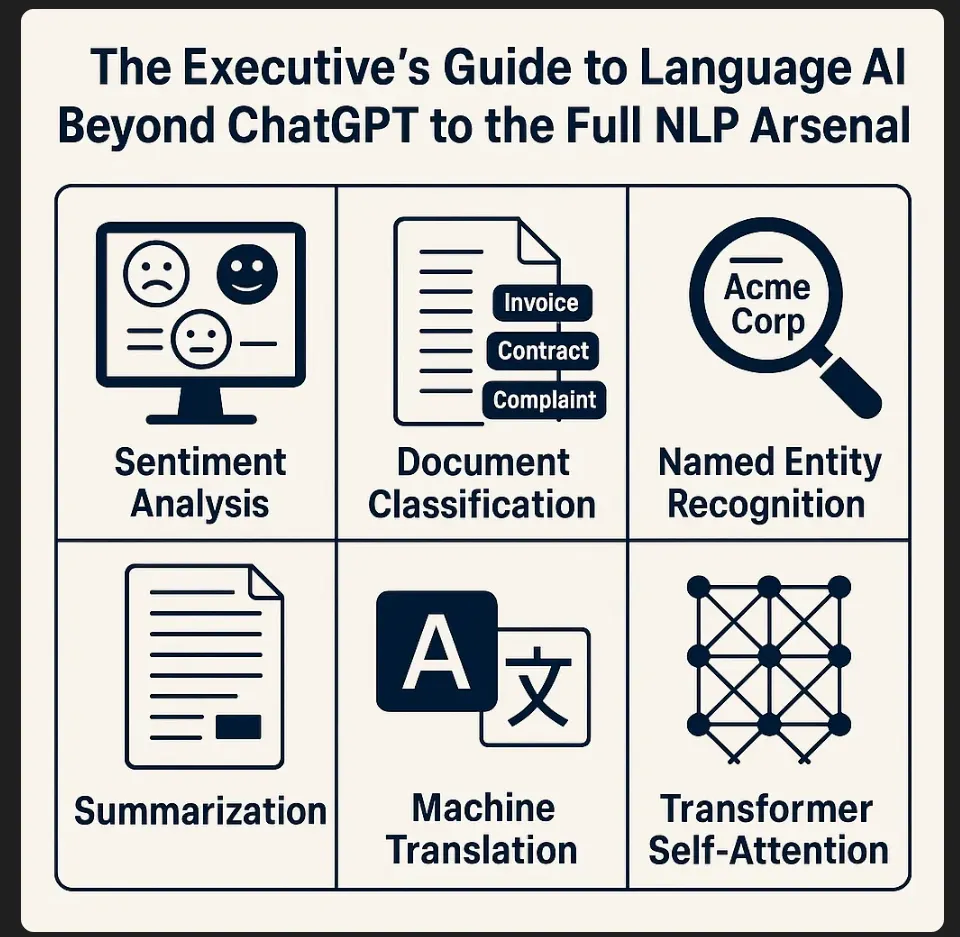
- Monitoring brand perception across social media.
- Prioritizing customer support tickets.
- Analyzing employee feedback at scale.
- Real-time product launch monitoring.
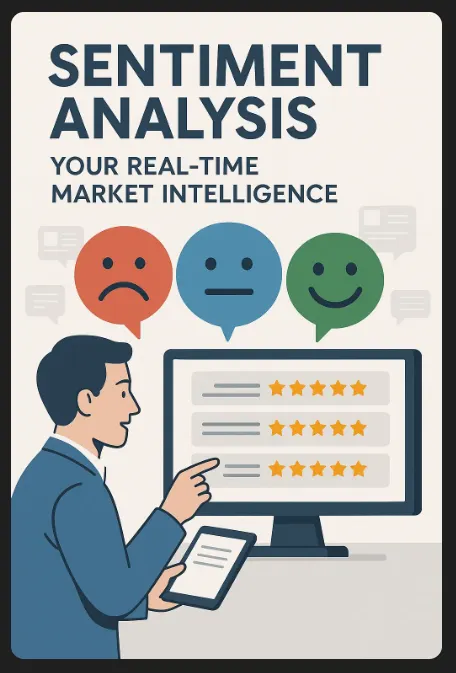
- Any process involving manual document sorting.
- Compliance monitoring across thousands of documents.
- Email routing and prioritization.
- Contract analysis and risk assessment.
- Compliance monitoring (finding every mention of specific regulations).
- Competitive intelligence (tracking competitor mentions across sources).
- Contract analysis (extracting dates, parties, obligations).
- Customer data management (unifying records across systems).
-
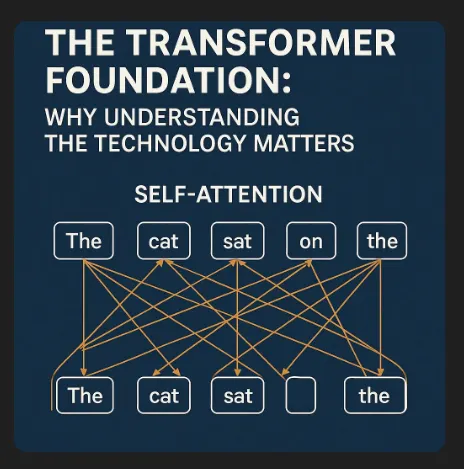
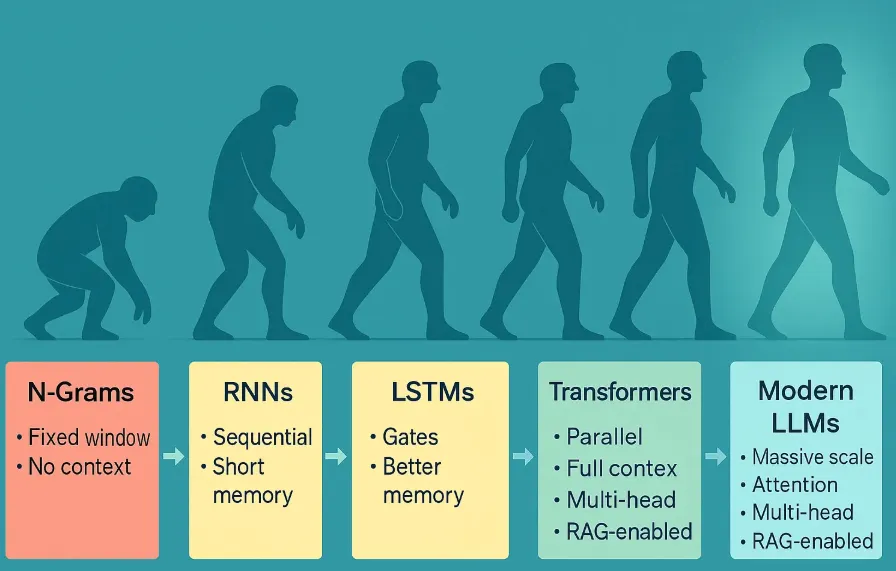
Why can these models understand context across entire documents.
-
Why they sometimes confidently produce wrong answers (they see patterns, not meaning).
-
Why they work well for some tasks and fail at others.
-
How to architect solutions that maximize strengths and minimize weaknesses.
-
Traditional fine-tuning of a large model: $50,000-$500,000 in compute costs.
-
PEFT/LoRA fine-tuning: $500-$5,000 for similar performance.
-
Time to deploy: Days instead of months.
-
Infrastructure required: A single high-end GPU instead of a cluster.
-
A distilled sentiment model: 100x smaller, 50x faster, 98% as accurate for your use case.
-
Runs on edge devices or basic servers.
-
Costs pennies per thousand analyses instead of dollars.
-
Processing high volumes (millions of documents).
-
Latency matters (real-time customer interactions).
-
Edge deployment is valuable (retail locations, mobile devices).
-
Costs are scaling with volume.
-
You need consistent, predictable performance.
-
Handling diverse, unpredictable tasks.
-
Accuracy improvements drive significant value.
-
Complex reasoning is required.
-
You’re still experimenting and iterating.
-
Sentiment analysis for general business use.
-
Basic document classification.
-
Standard language translation.
-
Initial pilots and proof-of-concepts.
-
Industry-specific terminology is crucial (e.g., legal, medical, technical domains).
-
You have 1,000+ examples of your specific use case.
-
Off-the-shelf accuracy is 70–80% but you need 95%+.
-
Regulatory compliance requires consistency.
-
Volume justifies optimization investment.
-
Core business differentiation depends on it.
-
Unique use cases with no existing solutions.
-
Requirement for complete control and privacy.
-
Integration with proprietary systems is a complex process.
-
Challenge: Analyze 1M+ customer reviews daily across 15 languages.
-
Solution: Fine-tuned sentiment model with PEFT, then quantized for deployment.
-
Results: 95% accuracy (up from 78% with the generic model), 5x faster processing, 80% cost reduction, and runs on existing infrastructure.
-
Challenge: Classify and extract data from 50,000 documents daily.
-
Solution: Ensemble of specialized models, each optimized for document types.
-
Results: 99.2% classification accuracy, 70% reduction in processing time $2M annual savings in manual review costs. Models run on-premise for security compliance.
-
GPT-4o API: ~$2.50 per million input tokens, $10 per million output tokens.
-
GPT-4o-mini: ~$0.15 per million input tokens, $0.60 per million output tokens.
-
Fine-tuned custom models: Often 10- 50x cheaper per token.
-
Edge-deployed quantized models: Minimal marginal cost per inference.
-
Same hardware handles 10x more volume.
-
Response times drop from seconds to milliseconds.
-
You can deploy sophisticated AI where it wasn’t feasible before.
-
Edge deployment becomes possible, enabling new use cases.
- Optimization Assessment: Which high-volume processes could benefit from specialized, optimized models versus generic APIs?
- Fine-Tuning ROI: Where would a 15–20% accuracy improvement through PEFT justify the investment?
- Deployment Strategy: Should models run in the cloud, on-premise, or at the edge for your use cases?
- Cost Trajectory: As volumes grow, when does optimization become necessary versus a nice-to-have feature?
- Competitive Efficiency: Are competitors using optimized models to deliver faster, cheaper, or better services?
- RAG Integration: Have you implemented retrieval-augmented generation to ground AI responses in your real-time data? (Then, once you decide on RAG, is that light RAG, context-driven RAG, Graph RAG, or MCP-based agentic RAG?)

- Start with powerful pre-trained models
- Fine-tune efficiently with PEFT for your specific needs
- Optimize aggressively for high-volume use cases
- Deploy strategically based on performance requirements
- Implement RAG to ground responses in your actual data
- Continuously monitor and improve
-
GenAI for the Busy Executive: Don’t Fall Behind — Rise of MCP and A2A
-
The Executive Imperative: AI isn’t Just Tech, It’s Your Bottom Line
-
Introduction: From Hype to High Returns — Architecting AI for Real-World Value (June 2025)
-
U.S. Marine Corps’ AI Playbook: Businesses Take Note (Published in Spillwave Solutions)
-
AI Boon or Doom?: Why the Latest AI Predictions Sound Familiar (Published in Spillwave Solutions)
-
MCP: From Chaos to Harmony — Building AI Integrations with the Model Context Protocol (June 2025)
-
Anthropic’s Claude and MCP: A Deep Dive into Content-Based Tool Integration
-
DSPy Meets MCP: From Brittle Prompts to Bulletproof AI Tools
-
LangChain and MCP: Building Enterprise AI Workflows with Universal Tool Integration
-
Anthropic’s MCP: Set up Git MCP Agentic Tooling with Claude Desktop
-
OpenAI Meets MCP: Transform Your AI Agents with Universal Tool Integration
-
Securing MCP: From Vulnerable to Fortified — Building Secure HTTP-based AI Integrations
-
Securing LiteLLM’s MCP Integration: Write Once, Secure Everywhere
-
Securing DSPy’s MCP Integration: Programmatic AI Meets Enterprise Security
-
Securing LangChain’s MCP Integration: Agent-Based Security for Enterprise AI
-
Securing OpenAI’s MCP Integration: From API Keys to Enterprise Authentication
-
Why Language Is Hard for AI — and How Transformers Changed Everything
-
Build Production AI in Minutes: The Developer’s Guide to Transformers and Hugging Face
-
Transformers and the AI Revolution: The Role of Hugging Face